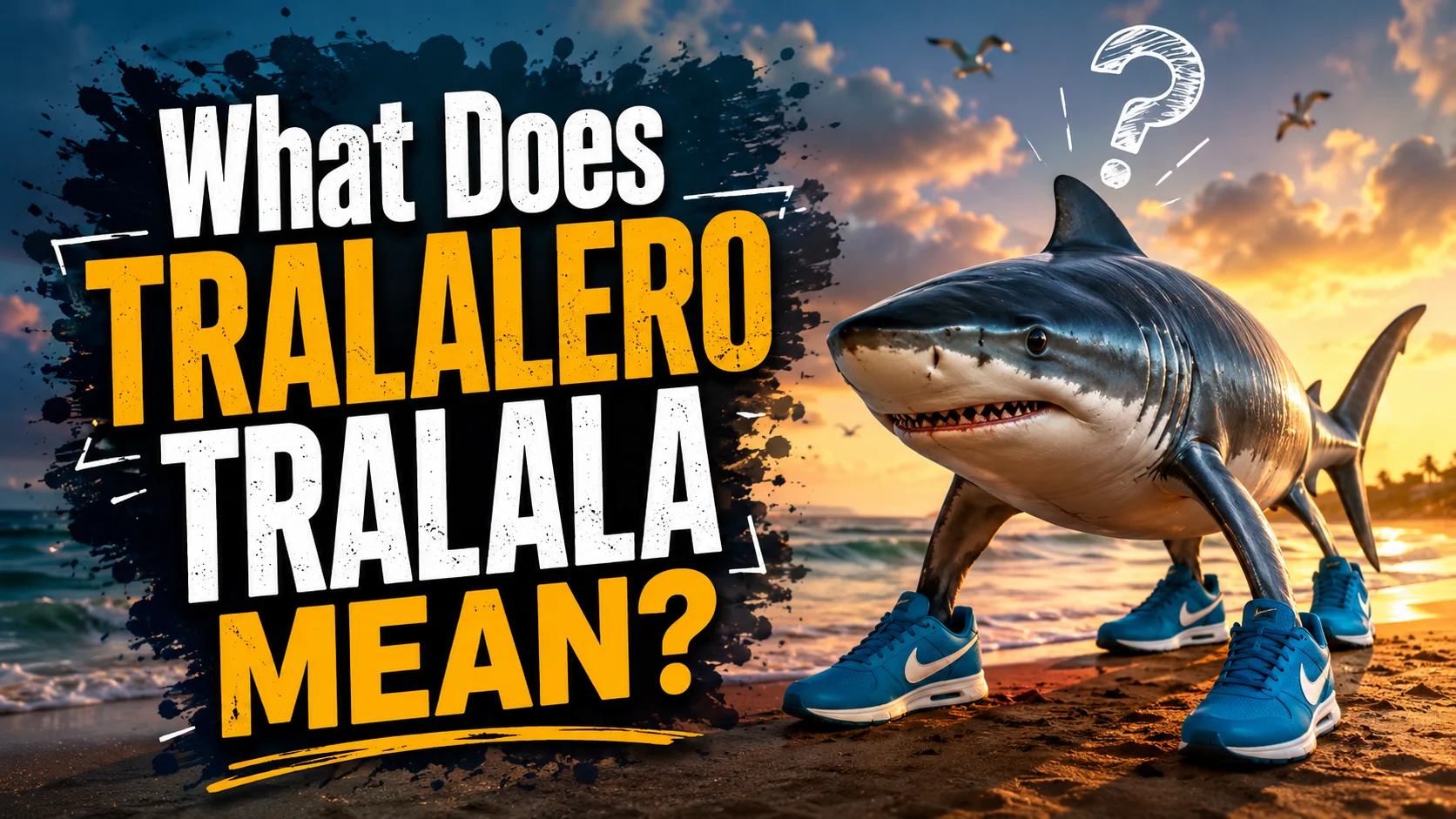
What Does Tralalero Tralala Mean is something you’ve probably heard while scrolling through TikTok or watching a random meme that made you pause for a second — Tralalero tralala. It sounds playful, a little chaotic, and honestly completely meaningless at first glance, yet somehow it sticks. People repeat it, remix it, and drop it into conversations like it actually means something. From my own experience, it shows how a simple sound can become a viral trend that makes people curious about what does mean in the first place.
The viral trend is often explained in a fun simple way, where users are told to discover its origin meaning viral trend. You even see captions like “click to learn more now,” which makes it feel more like internet culture than real language. But the twist is simple — it has no clear definition, isn’t real Italian, and doesn’t translate into English. Instead, it works like a sound-based expression, similar to “la la la” or “whatever,” showing how online culture, especially AI-generated memes and TikTok trends, turns random noise into shared humor and emotional expression.
The Simple Meaning of Tralalero Tralala
Tralalero Tralala does not have a deep dictionary definition. In most cases, it works as a rhythmic nonsense phrase used for humor, parody, and chaotic meme content.
Think about phrases like:
- “La la la”
- “Skibidi”
- “Bing bong”
- “Ba da bing”
- “Sha la la”
These phrases sound catchy even when they technically mean nothing. “Tralalero Tralala” follows the same pattern.
The meme became popular because people found the sound ridiculous, repetitive, and strangely addictive. Once TikTok users started pairing it with AI-generated characters and loud edits, the trend exploded.
In meme culture, meaning often matters less than vibe.
That’s the key idea here.
Does Tralalero Tralala Have a Real Translation?
This question confuses many people because different versions of the meme exist online.
Some clips only include musical sounds or nonsense vocals. Others contain actual Italian phrases mixed into the audio. A few versions even include vulgar jokes or offensive language.
So the answer depends on which version you hear.
Here’s the breakdown:
| Version | Meaning |
| Pure “Tralalero Tralala” audio | Mostly nonsense rhythmic sounds |
| Meme remix versions | Internet humor with no literal meaning |
| Original uncensored audio | Includes Italian slang and offensive phrases |
| TikTok-friendly edits | Usually censored or partially muted |
Many reposted clips remove controversial lines because TikTok moderation systems flag offensive audio quickly.
That’s why different people describe the meme differently online.
Why the Phrase Sounds So Catchy
The phrase works because it uses repetition and rhythm. Human brains naturally remember repeated sounds.
For example:
- “Tra-la-la”
- “Tralalero”
- “La-la-la”
These patterns feel musical even without instruments.
Psychologists often call this a phonetic loop effect. Your brain keeps replaying short rhythmic sounds because they create familiarity. TikTok trends thrive on this exact principle.
That’s also why many users repeat the phrase ironically in comments sections.
One person types it. Then thousands join in.
Internet culture turns repetition into comedy.
Where Did Tralalero Tralala Start?
The meme gained massive traction on TikTok during 2025. Most internet researchers trace its rise to the broader “Italian brainrot” trend.
This genre mixed together:
- AI-generated voices
- Fake Italian names
- Surreal characters
- Loud music
- Random humor
- Chaotic editing
Soon after, creators began posting strange AI visuals alongside repetitive audio clips. One recurring character showed a shark wearing Nike sneakers. That image became instantly recognizable.
From there, the meme spread like wildfire.
The Early TikTok Explosion
TikTok’s algorithm played a huge role.
The platform rewards:
- Repeatable sounds
- Short watch loops
- Strange visuals
- Fast engagement
- Comment spam
- Remix culture
“Tralalero Tralala” checked every box.
People watched the clips repeatedly because they felt bizarre and hypnotic. Even users who hated the meme often replayed it.
Ironically, confusion helped the trend grow faster.
When viewers ask:
“What did I just watch?”
…they usually watch again.
That’s how viral internet loops work.
Who Created Tralalero Tralala?
Pinpointing the exact creator is difficult because meme culture moves through reposts and edits incredibly fast.
Many early TikTok uploads disappeared or became buried under thousands of remixes. Some users claim specific accounts started the trend while others argue the meme evolved collaboratively.
That’s common with modern internet humor.
Unlike older memes with clear origins, AI meme culture often spreads through collective remixing. One creator posts an idea. Another changes the audio. Someone else adds a character. Soon nobody knows who started it.
The meme becomes community property.
Italian Brainrot Meaning Explained
“Italian brainrot” describes a chaotic style of meme humor that combines:
- Fake Italian-sounding phrases
- AI-generated voices
- Absurd visuals
- Overstimulating editing
- Random internet nonsense
The term “brainrot” itself means content so repetitive or strange that it “rots your brain” in a humorous way.
People don’t use the phrase literally.
Instead, they use it jokingly to describe internet content that feels:
- Addictive
- Stupid
- Hilarious
- Chaotic
- Impossible to explain
Italian brainrot became one of the biggest meme genres of the AI era.
Common Features of Italian Brainrot Memes
Most Italian brainrot memes include:
| Feature | Description |
| AI voices | Robotic or exaggerated narration |
| Fake Italian names | Intentionally ridiculous phrases |
| Surreal animals | Sharks, crocodiles, bananas, hybrid creatures |
| Loud music | Phonk, bass-boosted edits, distorted sounds |
| Fast editing | Constant motion and flashing visuals |
| Nonsense humor | Random jokes without logic |
The humor feels intentionally overwhelming.
That’s part of the appeal.
Popular Italian Brainrot Characters
Several viral characters helped define the genre.
Tralalero Tralala
The most recognizable meme phrase linked to the trend.
Bombardiro Crocodilo
A chaotic crocodile-themed AI meme character.
Ballerina Cappuccina
A dancing coffee-themed absurdist meme personality.
Chimpanzini Bananini
A fake Italian monkey-banana hybrid meme.
Tung Tung Tung Sahur
A rhythmic meme phrase mixed into brainrot compilations.
Each character exists inside a bizarre shared meme universe where logic barely matters.
The Meme Speaks the Language of Modern Internet Humor
Older generations often struggle to understand brainrot memes because the humor feels random.
Gen Alpha grew up online surrounded by:
- TikTok loops
- AI-generated content
- Meme remix culture
- Ultra-fast editing
- Irony layered on irony
To younger audiences, randomness itself became the joke.
That’s why phrases like “Tralalero Tralala” spread rapidly among teens and kids.
The meme doesn’t need traditional structure. It only needs energy.
Why Randomness Feels Funny Online
Internet humor changed dramatically over the past decade.
Older memes usually relied on:
- Punchlines
- Setup and payoff
- Clear jokes
Modern meme culture often relies on:
- Confusion
- Absurdity
- Noise
- Repetition
- Irony
That shift explains why many adults say:
“This makes no sense.”
Meanwhile younger audiences laugh instantly.
The lack of logic becomes part of the entertainment.
The Attention Economy Changed Comedy
Social media platforms reward content that grabs attention within seconds.
Creators now compete against:
- Millions of videos
- Short attention spans
- Endless scrolling
As a result, memes became louder, stranger, and faster.
“Tralalero Tralala” fits perfectly into this ecosystem.
It’s impossible to ignore.
The Audio Contains More Than Nonsense
One major misconception surrounds the original audio.
Many people assume the phrase contains only meaningless sounds. However, some versions include Italian slang and explicit language.
That’s why you’ll often see warnings about uncensored clips.
Several reposted versions:
- Mute offensive words
- Replace sections with music
- Add phonk overlays
- Use AI remixes instead
As the meme spread globally, users transformed the original sound into cleaner versions suitable for mainstream platforms.
Why TikTok Creators Edit the Audio
TikTok moderation systems aggressively flag:
- Hate speech
- Profanity
- Offensive content
Creators adapted quickly.
They started using:
- Distorted remixes
- Music overlays
- Edited audio snippets
- AI-generated replacements
Eventually the remixes became more popular than the original recording itself.
That happens frequently in meme culture.
The remix overtakes the source material.
Why the Shark Became the Face of the Meme
One of the most recognizable images tied to the trend features a shark wearing Nike sneakers.
The image looks absurd because it combines:
- A dangerous animal
- Human fashion
- AI-generated realism
- Internet randomness
That contrast creates instant meme energy.
The shark became iconic because viewers remembered it immediately.
Why Sneakers Matter in Meme Design
Oddly specific visual details help memes spread.
Without the shoes, the shark might look generic.
The Nike sneakers:
- Add personality
- Create visual humor
- Make the image recognizable
- Increase remix potential
Memes thrive on recognizable symbols.
The shark’s sneakers became part of the meme’s identity.
AI Image Generators Helped the Meme Explode
Before AI tools became mainstream, creating surreal visuals required real editing skills.
Now anyone can generate bizarre images within seconds.
That changed meme culture forever.
Creators can instantly produce:
- Sharks in sneakers
- Flying cappuccinos
- Banana monkeys
- Dancing crocodiles
The barrier to entry disappeared.
As a result, internet humor became even more chaotic.
TikTok’s Algorithm Rewards Repeatable Audio
TikTok transformed internet culture by prioritizing:
- Audio reuse
- Remixing
- Trends
- Fast loops
“Tralalero Tralala” succeeded because creators could easily:
- Lip-sync it
- Remix it
- Add effects
- Combine it with edits
- Spam it in comments
Every repost pushed the meme further.
Why Short-Form Platforms Amplify Brainrot Content
Short-form content changes how people consume entertainment.
Platforms like:
- TikTok
- Instagram Reels
- YouTube Shorts
…favor quick emotional reactions.
The strongest reactions usually come from:
- Shock
- Confusion
- Humor
- Curiosity
Brainrot memes trigger all four instantly.
Meme Culture Became Collaborative
Modern memes no longer belong to one creator.
Instead, communities continuously remix trends.
For example:
- One user uploads audio
- Another creates a character
- Someone adds phonk music
- Another creates anime edits
- Gamers add gameplay footage
- Meme pages repost everything
Within days, the meme evolves into something completely different.
That’s exactly what happened with Tralalero Tralala.
AI Changed Internet Humor Forever
AI tools dramatically accelerated meme production.
Today creators use AI for:
- Voice generation
- Music creation
- Character design
- Animation
- Image editing
- Video effects
This allows trends to spread faster than ever before.
A meme that once took weeks to develop can now explode overnight.
Why AI Memes Feel So Strange
AI-generated content often lands in the “uncanny valley.”
That means:
- Familiar things feel slightly wrong
- Human-like voices sound unnatural
- Faces appear distorted
- Movements feel surreal
Ironically, this awkwardness makes memes funnier.
The weirdness becomes entertaining.
AI Memes Reflect Modern Internet Chaos
Tralalero Tralala isn’t just a random joke.
It represents a broader shift in online culture:
- Faster trends
- Lower attention spans
- Remix-based humor
- AI-assisted creativity
- Collective meme ecosystems
In many ways, the meme perfectly captures the internet of the 2020s.
Why Some People Criticize the Meme
The meme sparked controversy for several reasons.
Common criticisms include:
- Offensive language in original audio
- Religious references
- Children repeating phrases unknowingly
- Excessive spam behavior
- Overstimulating content
Some parents and educators argue that brainrot memes encourage mindless consumption.
Others worry young users repeat phrases without understanding them.
Why Fans Defend the Meme
Supporters argue the meme is simply absurd humor.
They compare it to older nonsense trends from previous internet eras.
Many fans believe:
- The meme isn’t meant to be serious
- Randomness itself is the joke
- Irony drives the humor
- People overanalyze meme culture
This debate reflects a broader conversation about modern internet comedy.
The Internet Has Always Loved Nonsense
While brainrot memes feel new, nonsense humor existed for decades.
Examples include:
- Vine humor
- YouTube Poop edits
- Surreal memes
- Random LOL culture
- Absurdist comedy
The difference today is speed.
AI and TikTok amplify everything instantly.
Repetition Creates Familiarity
Humans naturally remember repeated sounds and patterns.
That’s why:
- Songs get stuck in your head
- Catchphrases spread rapidly
- Meme audio loops work so well
“Tralalero Tralala” uses repetition strategically.
Even people who dislike the meme often remember it.
The Meme Exploits Short Attention Spans
Modern social platforms train users to consume content rapidly.
Brainrot memes adapt perfectly because they:
- Deliver instant stimulation
- Require little context
- Create fast reactions
- Encourage rewatches
The meme feels chaotic yet oddly digestible.
That combination drives virality.
Meme Communities Create Social Pressure
People often repeat viral phrases because everyone else does.
This creates:
- Comment spam chains
- Inside jokes
- Shared internet language
Eventually the phrase becomes recognizable even to people who never watched the original meme.
That’s how internet slang spreads.
Phonk Remix Versions
Phonk music became deeply connected to brainrot memes.
These edits usually feature:
- Bass-heavy audio
- Distorted vocals
- Fast cuts
- Aggressive visuals
The dramatic sound increases meme intensity.
Anime Edit Versions
Anime creators quickly adopted the trend.
Popular edits combine:
- Fight scenes
- Dramatic transitions
- Tralalero audio
- AI visuals
These videos perform especially well on TikTok and YouTube Shorts.
Gaming Meme Versions
Gamers frequently use the audio during:
- Fortnite clips
- Minecraft edits
- Roblox memes
- Call of Duty montages
Gaming culture and meme culture overlap heavily online.
That crossover helped the trend spread faster.
AI Battle Videos
One strange subgenre involves fictional “battles” between brainrot characters.
Examples include:
- Shark vs crocodile edits
- Meme tournaments
- AI-generated wars
- Power scaling jokes
These clips build fake lore around absurd characters.
Viewers treat the joke universe seriously even though everyone knows it’s nonsense.
That irony makes the trend more entertaining.
Tralalero Tralala Meaning on TikTok, Instagram, and Snapchat
Meaning on TikTok
On TikTok, the phrase usually means:
- Meme participation
- Chaotic humor
- Brainrot culture
- Trend awareness
Users spam it in comments to signal they understand the joke.
Meaning on Instagram Reels
Instagram audiences often use the phrase ironically.
It appears in:
- Meme pages
- AI edits
- Viral remix videos
- Comment sections
The meme spread quickly because Reels aggressively promotes trending audio.
Meaning in Discord and Gaming Communities
Gaming communities transformed the phrase into an inside joke.
Players often:
- Shout it during matches
- Use it in usernames
- Spam it in chats
- Create meme soundboards
This community-driven repetition keeps the meme alive longer.
Spam Becomes Participation
In meme culture, repeating phrases often signals group membership.
Typing:
“Tralalero Tralala”
…shows you recognize the trend.
It’s similar to:
- Posting reaction GIFs
- Using meme templates
- Repeating catchphrases
Participation matters more than meaning.
Read More: DM Meaning in Text?
Irony Fuels Meme Lifecycles
Modern internet humor heavily relies on irony.
People repeat memes because:
- They genuinely enjoy them
- They think they’re stupid
- They enjoy annoying others
- They appreciate the absurdity
Often all four reasons overlap.
That’s why brainrot memes survive longer than expected.
The Meme Evolved Beyond a Simple Trend
By 2026, the phrase became more than a temporary viral moment.
Even though peak popularity slowed, the meme still appears across:
- TikTok compilations
- Meme pages
- Gaming edits
- Discord communities
- AI meme channels
The phrase entered broader internet culture.
Why Some Memes Never Fully Disappear
Internet trends usually die quickly. However, certain memes survive because they become cultural references.
Examples include:
- Rickrolling
- Doge
- Skibidi memes
- Trollface
Tralalero Tralala may follow a similar path.
Even when people stop posting it daily, the meme remains recognizable.
The Meme Represents the AI Internet Era
The trend reveals several important shifts in online culture:
| Old Internet | Modern Internet |
| Human-edited memes | AI-assisted memes |
| Slower trends | Instant virality |
| Clear punchlines | Absurd irony |
| Forum communities | Algorithm-driven feeds |
| Static images | Fast video loops |
Tralalero Tralala sits at the center of this transformation.
Future Meme Trends Will Likely Become Even Stranger
As AI tools improve, meme culture will continue evolving.
Future trends may include:
- Fully AI-generated influencers
- Interactive meme universes
- Personalized meme feeds
- Real-time AI remixing
The internet rarely becomes less chaotic.
Usually it becomes weirder.
Quick Facts About Tralalero Tralala
| Fact | Details |
| Main platform | TikTok |
| Meme genre | Italian brainrot |
| Core style | AI absurdist humor |
| Famous character | Shark wearing sneakers |
| Audio type | Repetitive rhythmic phrase |
| Peak popularity | 2025 |
| Main audience | Gen Alpha and younger Gen Z |
| Common formats | Edits, remixes, phonk videos |
| Common reaction | Confusion mixed with laughter |
Case Study: Why the Meme Went Viral
The Perfect Viral Formula
Tralalero Tralala succeeded because it combined several high-performing internet elements at once.
Viral ingredients:
- Catchy repetitive audio
- Strange AI visuals
- Remix-friendly structure
- Comment spam potential
- Short-form compatibility
- Gen Alpha humor
- Fast meme adaptability
Very few trends combine all these factors simultaneously.
That’s why the meme exploded globally.
Expert Insight on Brainrot Humor
Many media analysts describe brainrot humor as a response to overstimulation online.
One digital culture researcher explained it this way:
“Modern meme culture mirrors the speed and chaos of the internet itself.”
That observation perfectly describes Tralalero Tralala.
The meme feels fragmented, loud, confusing, and impossible to ignore. So does modern social media.
FAQs :
Q1: What Does Tralalero Tralala Mean?
It has no fixed meaning. It is a sound-based expression used in memes and TikTok trends for humor and randomness.
Q2: Is Tralalero Tralala a real language?
No, it is not real Italian or any official language. It is just playful internet-style wording.
Q3: Why is Tralalero Tralala popular on TikTok?
Because it is catchy, funny, and used in viral memes, making people repeat it without needing a real meaning.
Q4: Does Tralalero Tralala translate into English?
No, it does not translate into English because it has no literal meaning.
Q5: What is the purpose of this phrase online?
It is used as emotional filler, humor, and part of AI-generated memes and TikTok trends.
Conclusion :
Tralalero Tralala shows how internet culture turns simple sounds into viral content. Even without a real definition, it spreads through TikTok, memes, and online jokes because people enjoy its playful and chaotic nature. It reflects how modern communication often values emotion and humor more than literal meaning, especially in fast-moving digital trends.
