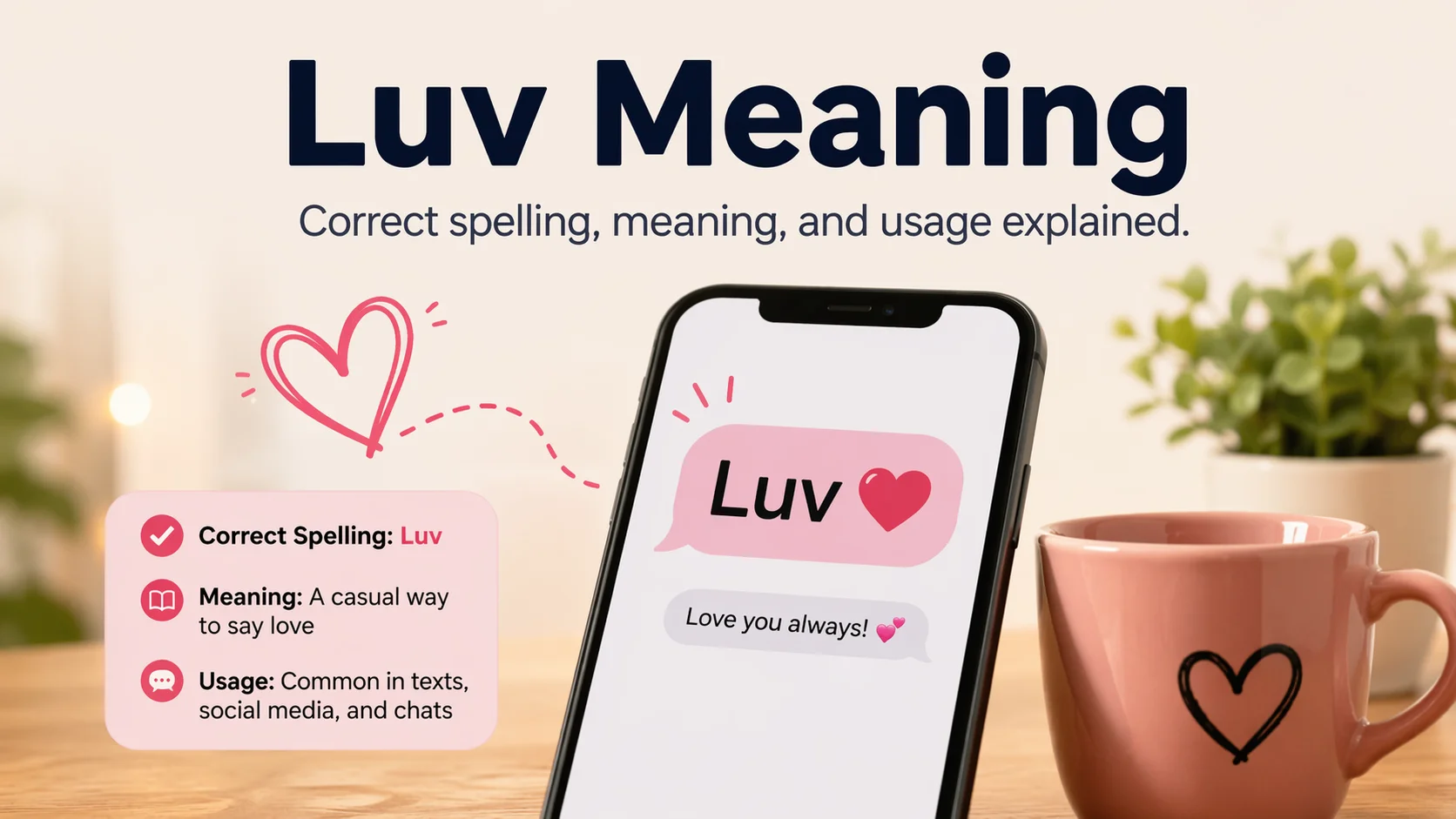
“Luv Meaning in Text” is an important focus keyword used to understand modern digital slang. The word “luv” is an informal spelling of “love”, commonly used in texting, chatting, and social media. It expresses affection, care, emotions, and friendliness in a more casual and soft way. People use it to sound cute, emotional, and relaxed in conversations. Instead of writing the full word “love,” users prefer “luv” to keep messages short, expressive, and easy to type in fast online communication.
In online chats, “luv” is used to show emotional connection, friendliness, support, and affection depending on context. It is often seen in phrases like “luv you,” meaning deep care or love, or sometimes just friendly liking. This slang is popular among young users because it feels casual, modern, and expressive. Understanding “luv meaning in text” helps readers correctly interpret tone, emotion, and intent in digital conversations, where short forms and slang words are widely used for quick communication.
What Does “Luv” Mean in Text? (Quick Answer)
“Luv” is an informal, casual spelling of “love” used in text messages, chats, and social media.
However, it doesn’t carry the same emotional weight.
Instead, it signals:
- Light affection
- Friendly warmth
- Playful tone
In most cases, when someone says “luv,” they aren’t expressing deep emotional love. They’re keeping things relaxed and easy.
Simple Example
- “I love you” → Deep, serious
- “Luv u” → Casual, friendly, quick
That difference matters more than people realize.
Why People Use “Luv” Instead of “Love”
You might wonder, why not just type “love”?
Well, texting habits evolved for a reason. Let’s unpack the real drivers behind it.
1. Speed and Convenience
Typing “luv” is faster. It cuts effort without losing meaning.
When conversations move quickly, people prefer:
- Shorter words
- Less typing
- Faster replies
2. Emotional Softening
Here’s something interesting.
“Luv” feels less intense than “love.”
That makes it safer to use in:
- Early relationships
- Friendships
- Casual chats
It lowers emotional pressure.
3. Internet and Chat Culture
Online communication shaped how we write.
Platforms like:
- SMS texting
- Messenger apps
- Social media
…encouraged shorter, more relaxed language.
“Luv” fits perfectly into that culture.
4. Tone Control
Words alone don’t always show tone.
So people tweak spelling to adjust meaning.
Think of “luv” as a tone modifier. It says:
“I care—but I’m keeping it light.”
The Real Tone Behind “Luv” (Context Is Everything)
Here’s where most people get confused.
“Luv” doesn’t have one fixed meaning. Its tone shifts depending on context.
Let’s break it down.
1. Friendly Affection
Used between friends or family.
Examples:
- “Luv ya bro!”
- “Sending luv your way!”
Tone:
- Warm
- Supportive
- Non-romantic
2. Playful or Flirty
Sometimes, “luv” adds a teasing or light romantic vibe.
Example:
- “Aww, luv that about you
Tone:
- Light flirting
- Not too serious
3. Casual Romance
In relationships, “luv” can signal affection without intensity.
Example:
- “Miss u, luv u
Tone:
- Caring
- Relaxed
- Comfortable
4. Ironic or Joking Use
Sometimes people use “luv” sarcastically.
Example:
- “Oh wow, I just luv waking up early
Tone:
- Irony
- Humor
Quick Context Table
| Sender Type | Likely Meaning | Emotional Tone |
| Friend | Friendly affection | Light |
| Partner | Casual love | Medium |
| Crush | Flirty | Playful |
| Stranger | Context-dependent | Unclear |
“Luv” vs “Love”: Key Differences Explained
This is where clarity matters.
Even though they look similar, they function differently.
Comparison Table
| Feature | Luv | Love |
| Tone | Casual, relaxed | Deep, serious |
| Emotion Level | Light to moderate | Strong, intense |
| Usage | Texts, chats, social media | Universal |
| Context | Informal | Formal + informal |
| Intent | Friendly or playful | Emotional commitment |
- “I love you.”
- “Luv u.”
They may look similar, yet
Real-Life Example
Imagine two messages:they feel very different.
- The first carries emotional weight
- The second feels easy and low-pressure
That difference can shape how a message is received.
When to Use “Luv” (And When to Avoid It)
Using “luv” at the wrong time can send the wrong signal.
Let’s get practical.
Also Read This: CTFU Meaning in Text: The Ultimate Guide to Online Slang in 2026
When You Should Use “Luv”
Use it when you want a relaxed tone.
Best situations:
- Chatting with friends
- Casual texting
- Social media comments
- Light flirting
When You Should Avoid “Luv”
Some situations require clarity and seriousness.
Avoid “luv” in:
- Professional emails
- Job applications
- Formal conversations
- Deep emotional discussions
Quick Decision Guide
| Situation | Use “Luv”? |
| Texting a friend | Yes |
| Talking to your boss | No |
| Romantic confession | No |
| Casual partner chat | Yes |
Common Text Examples of “Luv” in Real Conversations
Seeing real examples makes everything clearer.
Everyday Use Cases
- “Luv u, take care!”
- “I luv this movie!”
- “Luv ya, see you soon!”
- “Aww, luv that for you!”
What These Actually Mean
| Text Example | Real Meaning |
| “Luv u” | I care about you (casually) |
| “Luv this!” | I really like this |
| “Luv ya bro” | Friendly affection |
| “Luv that for you” | Support + happiness |
Is “Luv” Romantic or Just Friendly?
Short answer?
It can be both.
But here’s how you tell the difference.
Look at These Signals
1. Relationship Context
- Friend → likely non-romantic
- Partner → possibly romantic
2. Message Tone
- Emojis → adds meaning
- Plain text → more neutral
3. Frequency
- Occasional → casual
- Frequent → deeper connection
Case Study: Two Conversations
Case 1: Friends
- “Luv ya dude!”
→ Clearly friendly
Case 2: Romantic Interest
- “Goodnight, luv u ❤️”
→ Likely romantic
Same words. Different meaning.
Other Similar Slang Words Like “Luv”
Understanding related slang helps you read messages better.
Popular Alternatives
- Ly → Love you
- Luv ya → More playful version
- XOXO → Hugs and kisses
- <3 → Heart symbol
Comparison Table
| Slang | Meaning | Tone |
| Luv | Casual love | Light |
| Ly | Shortened love you | Neutral |
| XOXO | Affection | Warm |
| <3 | Love/like | Emotional |
The Evolution of “Luv” in Digital Communication
“Luv” didn’t appear randomly. It evolved.
1. Early SMS Era
Back when texting cost money per character, people shortened everything.
Examples:
- “u” instead of “you”
- “gr8” instead of “great”
“Luv” came from the same trend.
2. Chatrooms and Instant Messaging
Platforms like:
- MSN Messenger
- Yahoo Chat
…encouraged casual writing styles.
People typed how they spoke.
3. Social Media Explosion
Apps like:
- Snapchat
- TikTok
…made short, expressive language even more popular.
4. Why It Still Exists Today
Even though limits disappeared, habits stayed.
Why?
- Faster typing
- Familiar style
- Emotional tone control
Misunderstandings Around “Luv”
This is where things go wrong.
Common Mistakes
1. Assuming It Means Deep Love
It usually doesn’t.
2. Misreading Intent
You might think someone is flirting when they’re just being friendly.
3. Overusing It
Using “luv” too often can dilute meaning.
Quick Reality Check
Not every “luv” is a love confession.
Context always wins.
Should You Use “Luv” in 2026?
Short answer: Yes—but wisely.
Why It Still Works
- Fits modern texting
- Feels natural
- Keeps tone light
When It Works Best
- Casual chats
- Friendly messages
- Social media
When It Doesn’t
- Professional settings
- Serious emotional talks
Quick Summary of Luv Meaning in Text
Let’s simplify everything.
- “Luv” = casual version of “love”
- Used for friendly or light emotional expression
- Tone depends on context and relationship
- Not suitable for formal or serious communication
FAQs:
1. What does “luv” mean in text messages?
“Luv” is a casual, informal version of “love.” People use it to express light affection, friendliness, or appreciation without sounding too serious.
2. Is “luv” the same as saying “I love you”?
Not quite. “I love you” feels deeper and more emotional. “Luv u” sounds softer, quicker, and less intense, which makes it more suitable for casual conversations.
3. Can “luv” be used in a romantic way?
Yes, it can. However, it depends on context. Between partners, it can feel warm and caring. Between friends, it usually stays friendly and non-romantic.
4. Is it okay to use “luv” in formal or professional writing?
No, it’s best to avoid it. “Luv” is too informal for emails, job messages, or business communication. Stick with proper wording like “thank you” or “best regards.”
5. Why do people prefer “luv” instead of “love”?
People use “luv” because it’s:
- Faster to type
- Less emotionally heavy
- More relaxed and conversational
It fits perfectly into modern texting habits.
Conclusion:
Understanding the Luv Meaning in Text helps you read messages the right way and avoid confusion. At its core, “luv” is a casual and softer version of “love”, often used to express light affection, friendliness, or playful emotion. It doesn’t always carry deep emotional weight. Instead, it keeps things simple and relaxed. Whether someone says “luv u” or “luv this,” the meaning usually depends on context, tone, and relationship.
At the same time, you should use “luv” carefully. It works best in informal conversations, chats with friends, or light romantic situations. However, it doesn’t fit in professional or serious communication. Always pay attention to how and where you use it. In modern texting, small word choices like this can change the entire message. So, when you see or use **“luv,” remember it’s not just a shortcut—it’s a tone signal that shapes how your message feels.
