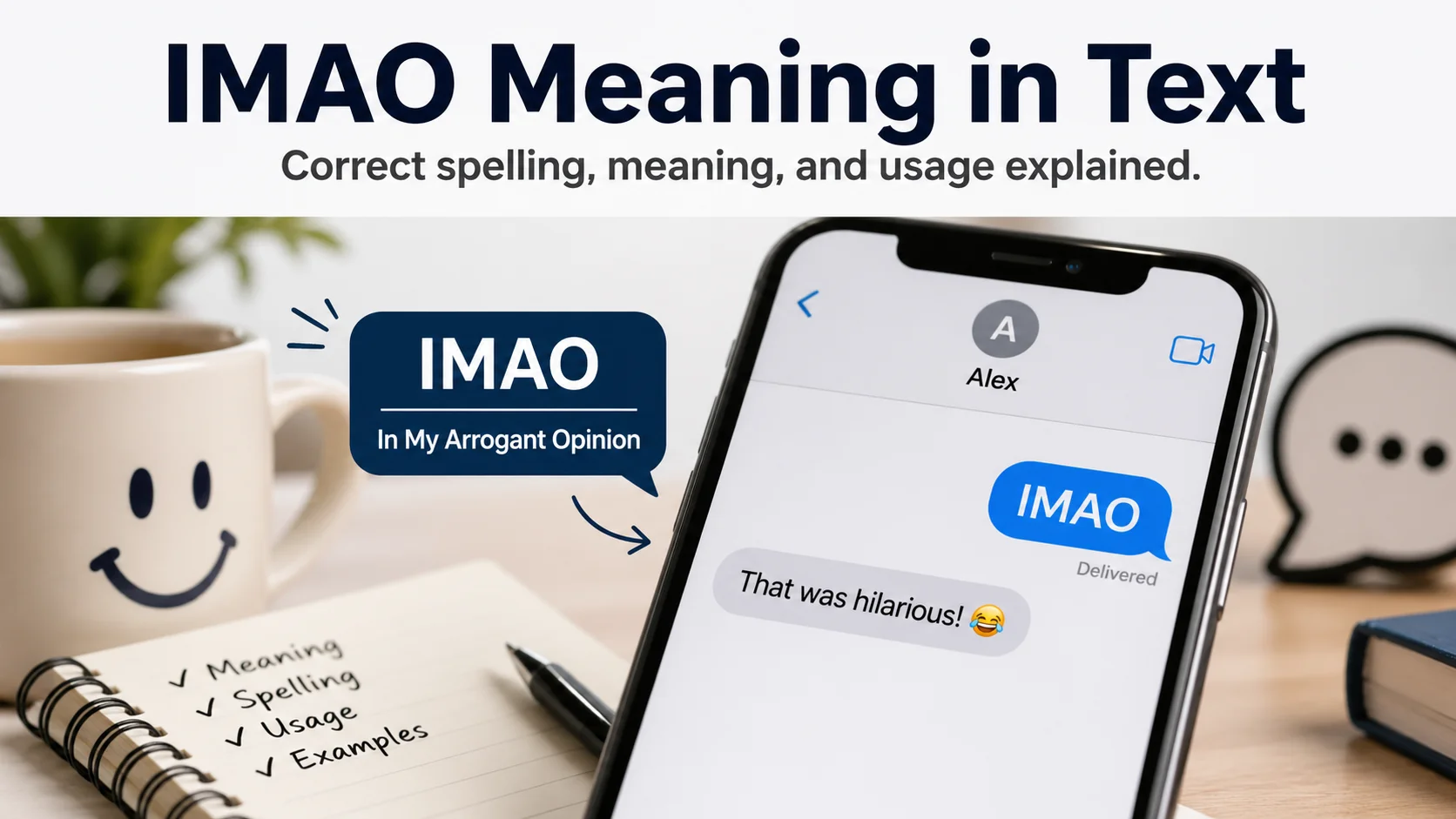
IMAO Meaning in Text is confusing slang used in chats where people mix it with LMAO IMO IMHO across WhatsApp TikTok Instagram DM messages every day confusion online users face
I have seen people get confused when they see IMAO in a WhatsApp, TikTok, Instagram, or chat message. It often looks like a typo of lmao, but it creates real confusion. Many users search the meaning, thinking it is new slang. In reality, it connects with other abbreviations like IMO and IMHO, which makes it harder to understand in fast online conversations across daily messaging platforms used worldwide today now
In online communication, IMAO often appears in quick text, DM, or social chat replies where tone matters. I remember thinking it was a typo, but it actually reflects fast evolving internet slang. People often mix it with LMAO, IMO, and IMHO, causing misunderstanding. Learning these terms helps improve communication, avoid awkward replies, and stay confident in digital conversations across modern platforms used by millions every single day online today worldwide
IMAO Meaning in Text (Simple Definition You Can Actually Use)
Let’s keep this simple.
IMAO stands for “In My Arrogant Opinion.”
That’s the core meaning.
It’s used when someone wants to share an opinion in a confident, exaggerated, or slightly sarcastic way.
Here’s the key idea:
- It’s not neutral like “IMO”
- It’s not polite like “IMHO”
- It’s intentionally bold or humorous
What it really communicates in conversation:
When someone types IMAO, they’re usually saying:
“I strongly believe this, and I know I might sound a bit full of myself.”
It’s often playful. Sometimes ironic. Rarely serious.
Where Did IMAO Come From? (Internet Culture Breakdown)
IMAO didn’t come from formal language. It grew from internet humor culture.
Early online communities—forums, chat rooms, and later Reddit-style threads—loved twisting common phrases for comedic effect.
People already used:
- IMO → In My Opinion
- IMHO → In My Humble Opinion
Then someone flipped the tone and created:
👉 IMAO = In My Arrogant Opinion
It caught on because it felt funny.
Why?
Because it exaggerates confidence on purpose.
Instead of softening opinions like “IMHO,” it does the opposite. It turns up the ego dial as a joke.
Think of it like this:
IMHO = “I don’t want to offend anyone.”
IMAO = “I might offend you, but I’m joking.”
That playful contrast helped it survive in meme culture and casual texting.
How People Actually Use IMAO in Real Conversations
Here’s where things get interesting.
IMAO is not used in formal writing or professional messages. It lives almost entirely in casual spaces.
You’ll see it in:
- Group chats
- Meme captions
- Social media comments
- Gaming conversations
- Reddit threads
1. Casual texting
Friends use it when joking around.
Example:
“IMAO, I think pineapple pizza is the peak of human achievement.”
It sounds confident but playful.
2. Sarcastic tone
People use it when they don’t actually mean it seriously.
Example:
“IMAO, I’m basically a genius for figuring out how to microwave noodles.”
Nobody believes it. That’s the point.
3. Online debates
Sometimes people use it to exaggerate an opinion in arguments.
Example:
“IMAO, this is the worst take I’ve ever seen online.”
Here, tone matters. It can feel funny or slightly rude depending on context.
4. Meme culture
IMAO thrives in humor-heavy spaces.
It often appears with:
- Reaction memes
- Over-the-top opinions
- Satirical posts
IMAO Examples in Text Messages (Realistic Scenarios)
Let’s make this practical.
Example 1: Friends chatting
A: “This movie was mid.”
B: “IMAO, it’s literally the best film of the decade 😂”
Example 2: Social media comment
“IMAO, cats are smarter than most humans online.”
Example 3: Gaming chat
“IMAO, I could’ve carried that match if my team didn’t sell.”
Example 4: Meme caption
“IMAO, sleep is optional when you have snacks.”
What do all these examples have in common?
- They exaggerate opinions
- They sound confident on purpose
- They stay light and humorous
That’s the pattern.
IMAO vs IMO vs IMHO (Important Differences You Need to Know)
These three often confuse people, but they’re not interchangeable.
Here’s a clear breakdown.
| Acronym | Meaning | Tone | When to Use |
| IMO | In My Opinion | Neutral | Everyday discussions |
| IMHO | In My Humble Opinion | Polite | Respectful disagreements |
| IMAO | In My Arrogant Opinion | Bold / Sarcastic | Humor, exaggeration |
Quick way to remember:
- IMO = neutral thinking
- IMHO = polite thinking
- IMAO = dramatic thinking
Simple analogy
Think of it like speaking styles:
- IMO → calm voice
- IMHO → polite voice
- IMAO → loud joking voice
Is IMAO Offensive? (Context Matters More Than Words)
On its own, IMAO is not offensive.
But tone changes everything.
When it feels harmless
- Among friends
- In memes
- In joking conversations
When it can feel rude
- During arguments
- In sensitive topics
- When used aggressively
Example:
“IMAO, you clearly don’t understand anything here.”
That shifts from funny → insulting quickly.
So the rule is simple:
If the conversation is serious, avoid it.
Read This: GTG Meaning in Text
Common Misunderstandings About IMAO
People often misunderstand this acronym. Let’s clear that up.
1. Confusing IMAO with LMAO
They look similar but mean different things:
- LMAO = Laughing My Ass Off
- IMAO = In My Arrogant Opinion
One is laughter. The other is opinion.
2. Thinking it’s formal slang
It’s not.
You won’t see it in:
- Emails
- Reports
- Academic writing
3. Misreading tone
Some people take it too seriously.
But most of the time, it’s not meant to offend.
When You Should NOT Use IMAO
Knowing when to avoid slang is just as important as knowing it.
Avoid IMAO in:
- Professional emails
- Job interviews or workplace chats
- Academic discussions
- Conversations with strangers
- Sensitive topics (health, politics, conflict)
Why?
Because it can make you sound:
- Overconfident
- Disrespectful
- Or just unprofessional
Better Alternatives to IMAO
If you want to sound natural but safe, try these instead:
1. IMO (safe and neutral)
“IMO, this approach works better.”
2. IMHO (polite tone)
“IMHO, there might be a better solution.”
3. Natural English phrases
You can also just say:
- “Honestly, I think…”
- “From my perspective…”
- “I feel like…”
These sound more human in serious conversations.
Why Internet Slang Like IMAO Keeps Evolving
Slang doesn’t stay still. It evolves fast because online communication moves fast.
Here’s why:
1. Speed of communication
People want shortcuts. Acronyms save time.
2. Meme culture influence
Humor spreads slang faster than formal language ever could.
3. Platform differences
Each platform shapes language differently:
- TikTok → visual + emotional slang
- X (Twitter) → short punchy phrases
- Reddit → ironic and layered humor
4. Generational change
Younger users constantly reshape language rules.
Case Study: How IMAO Shows Up in Online Behavior
Let’s look at a real-world style scenario.
Situation: Gaming community chat
A player writes:
“IMAO, I’m the best player in this lobby.”
Reactions:
- Friends laugh and reply with memes
- Some users join the joke
- One person misreads tone and gets annoyed
What this shows:
- IMAO works as humor in group settings
- It can easily be misinterpreted
- Tone depends heavily on community culture
This is why context always matters more than definition.
Quick Reference Cheat Sheet
Here’s a fast summary you can remember:
- IMAO = In My Arrogant Opinion
- Used for humor or exaggeration
- Common in texting and social media
- Not suitable for formal communication
- Tone can shift from funny to rude depending on context
FAQs:
Q1: What does IMAO mean in text?
IMAO is a slang-style internet abbreviation that people often use in chats, but it is commonly confused with LMAO, IMO, and IMHO.
Q2: Is IMAO the same as LMAO?
No, it is not the same. People often mistake it as a typo of LMAO, but the meaning and usage context can differ depending on the chat.
Q3: Where is IMAO commonly used?
It is mostly seen in WhatsApp, TikTok, Instagram, DM, and online chats where fast texting slang is used.
Q4: Why do people get confused by IMAO?
Because it looks similar to popular slang like IMO and IMHO, many users assume it is a typing error or new internet slang.
Q5: Should I use IMAO in formal messages?
No, it is better to avoid it in formal communication. It is mainly used in casual online chatting among friends.
Conclusion:
Understanding internet slang like IMAO helps you stay clear in digital conversations and avoid misunderstandings in fast messaging. Since it often appears similar to terms like LMAO, IMO, and IMHO, knowing the difference improves your online communication skills and keeps your chats more accurate and confident.
