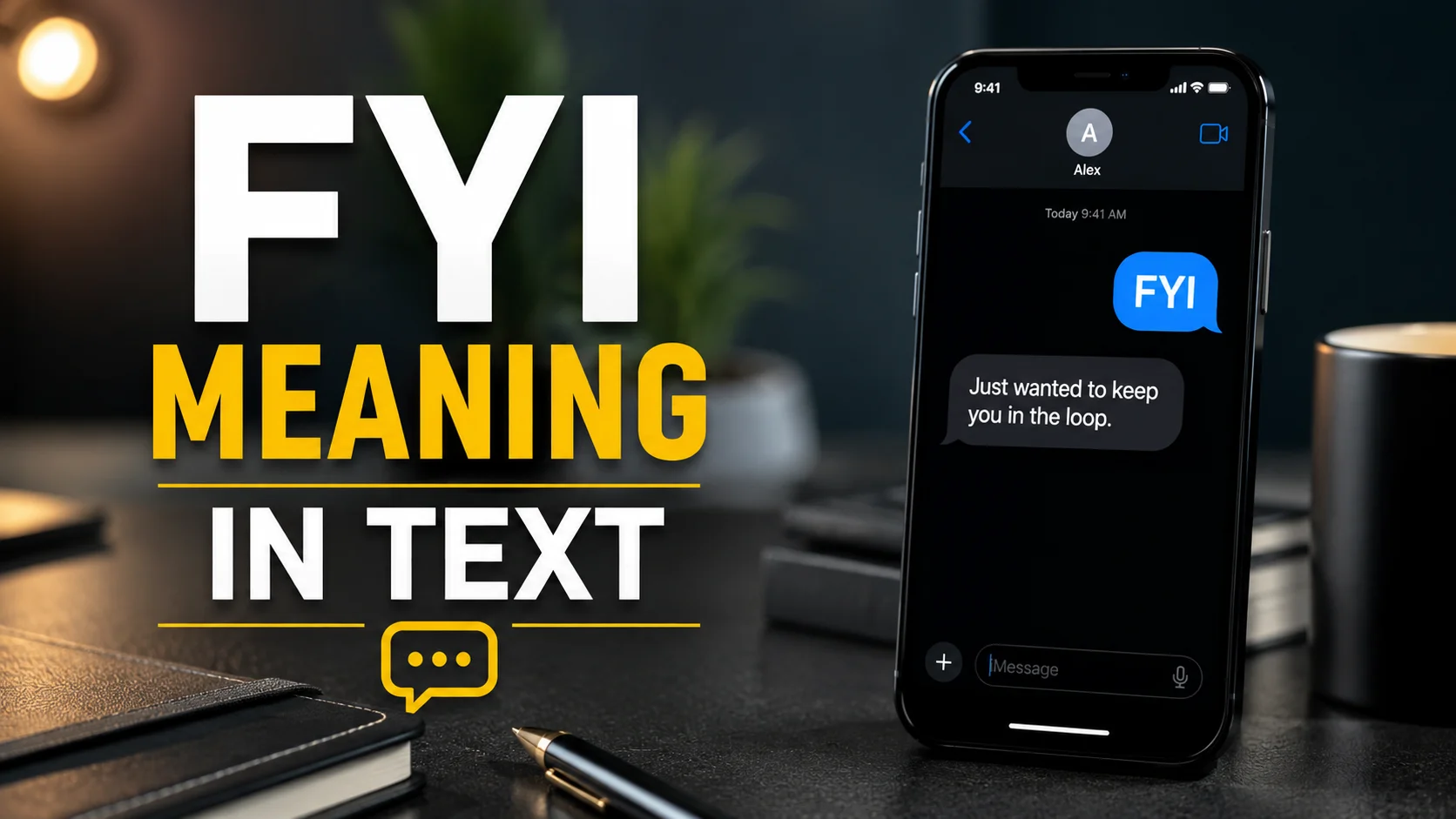
From my experience in digital world communication, I often seen FYI pop up in text, email, group chat, social media, and comment. At first, I used to paused and wonder about its meaning, because tone change depends on how it is used. In a fast-paced world of online chats, a simple message like FYI, meeting, 3 PM, or I’m running late feels helpful, neutral, or sometimes even cold. This is why people search its usage, alternatives, and best practices in a guide, so they don’t end up misusing it in a wrong way.
Over time, I learned that FYI is a small expression but not always harmless. In work messages and professional communication, especially with a coworker, it can sound formal, rude, or passive-aggressive if not used correctly. On the other hand, among friends, it feels more casual and simple. That’s why understanding its real meaning, real-life examples, and practical advice matters in the digital world. It helps you stay confident, avoid feeling out of loop, and use plain English instead of dictionary jargon, so your everyday communication always feels clear explanations and naturally confidently delivered.
What Does FYI Mean in Text?
FYI is an abbreviation for “For Your Information.”
At its core, it means:
👉 “I’m sharing this with you so you know about it, not because you need to act on it.”
That’s it. No hidden meaning. No command. No pressure.
But here’s where things get tricky. In real communication, people often assume meaning based on tone.
For example:
- “FYI, the meeting is at 3 PM.”
- “The meeting is at 3 PM.”
Both say the same thing. But FYI can sometimes feel more formal or distant.
FYI in simple words
Think of FYI as someone tapping your shoulder and saying:
“Just so you know this.”
No action required unless the message says otherwise.
It’s a shortcut used for speed. Especially in workplaces where people exchange dozens of messages a day.
Origin of FYI and How It Became Popular
FYI didn’t start in texting culture. It actually came from traditional office communication.
Back when businesses relied heavily on printed memos, secretaries and managers used abbreviations to save space and time. FYI was one of them.
It became popular in:
- Office memos
- Early business emails
- Internal corporate communication systems
Then something changed.
Email became mainstream. Then instant messaging arrived. Platforms like Slack and Microsoft Teams made communication faster and shorter.
FYI fit perfectly into this new style.
Today, you’ll see FYI everywhere:
- Corporate emails
- WhatsApp groups
- Project management tools
- Even casual conversations between friends
It moved from formal offices into everyday life.
That shift changed how people feel about it.
How FYI Is Used in Real Conversations
FYI is flexible. It appears in different settings with slightly different tones.
Let’s look at real-life examples.
Workplace communication
In offices, FYI is used to pass information quickly.
Examples:
- “FYI, the client moved the deadline to Friday.”
- “FYI, HR updated the leave policy.”
- “FYI, the server will be down tonight for maintenance.”
Here, the goal is clarity. Not emotion. Not persuasion.
It keeps communication efficient.
Personal chats
In casual conversations, FYI becomes more relaxed.
Examples:
- “FYI, your favorite series released a new season.”
- “FYI, I’m running late today.”
- “FYI, your package arrived.”
In this setting, FYI feels more like a friendly heads-up.
But tone still matters. With the wrong timing, it can sound slightly distant.
Email usage
Emails are where FYI is most structured.
You’ll often see it in:
- Subject lines
- Forwarded messages
- Updates
Examples:
- “FYI: Updated project schedule attached”
- “FYI – Meeting notes from today”
- “FYI: Policy changes effective immediately”
It helps the reader quickly understand the purpose of the message without reading everything first.
Tone of FYI (Why It Can Feel Different)
FYI is neutral on paper. But in real life, tone depends on context.
Here’s what can influence how it feels:
- Relationship between sender and receiver
- Message timing
- Situation urgency
- Previous conversation history
When FYI feels helpful
It feels helpful when:
- The sender is polite
- The message is informative
- No hidden expectations exist
Example:
“FYI, parking is free after 6 PM.”
This feels like a friendly update.
When FYI feels cold
It can feel cold when:
- The message is short and abrupt
- There’s no greeting or context
- It replaces a full sentence
Example:
“FYI. You missed the deadline.”
Same abbreviation. Very different emotional impact.
When FYI feels passive-aggressive
This is where things get interesting.
Sometimes people use FYI to subtly express frustration.
Example:
“FYI, I already sent this twice.”
It sounds informational. But emotionally, it can feel like blame.
That’s why tone awareness matters.
When You Should Use FYI
FYI works best when you want to share information without expecting action.
Here are the best situations:
- Sharing updates
- Giving background information
- Forwarding useful details
- Informing someone about changes
- Sending non-urgent notifications
Example scenarios
- Project updates at work
- Travel or schedule changes
- General announcements
- Shared information in groups
Think of FYI as a “no reply needed” signal.
But only use it when that’s truly the case.
When You Should Avoid FYI
FYI is not always the best choice.
Avoid it when:
You need action
If you want someone to do something, don’t rely on FYI.
Bad:
“FYI, the form is due today.”
Better:
“Please submit the form today before 5 PM.”
You need emotional clarity
FYI can feel distant in emotional conversations.
Example:
“I’m upset FYI.”
This sounds cold and unclear.
You want warmth
In friendly or sensitive messages, FYI can reduce emotional tone.
Instead, try:
- “Just wanted to let you know…”
- “I thought you’d like to know…”
Common Misunderstandings About FYI
Many people misread FYI because they assume tone instead of meaning.
Misunderstanding 1: FYI always requires no response
Not true. Sometimes context implies action even if FYI is used.
Misunderstanding 2: FYI is rude
Not always. It depends on delivery.
Misunderstanding 3: FYI replaces explanation
Wrong. FYI only introduces information. It doesn’t explain it fully.
FYI vs Similar Expressions
Different phrases carry different emotional weight.
| Phrase | Meaning | Tone | Use Case |
| FYI | For your information | Neutral | Quick updates |
| Just so you know | Informal FYI | Friendly | Casual chats |
| Heads up | Warning or notice | Slight urgency | Upcoming issue |
| Please note | Formal instruction | Professional | Official communication |
| Quick update | Informational | Friendly | Work or personal |
Each version changes how the message feels.
Better Alternatives to FYI
Sometimes FYI feels too cold or vague. In those cases, use alternatives.
Friendlier options
- “Just letting you know…”
- “I wanted to share this with you…”
- “Quick update for you…”
More professional options
- “Please be informed that…”
- “For your awareness…”
- “Kindly note…”
More human-sounding options
- “Thought you might want to know…”
- “In case you missed it…”
These small changes improve tone instantly.
Read More: Gyatt Meaning Slang Explained
Real-Life Communication Scenarios
Let’s see how FYI works in everyday life.
Workplace scenario
A manager sends:
“FYI, the meeting has been rescheduled to 4 PM.”
This keeps everyone aligned without unnecessary replies.
But if urgency exists:
“Please attend the meeting at 4 PM today.”
Notice the difference in intent.
Friend chat scenario
A friend texts:
“FYI, that cafe you like is offering discounts today.”
Feels casual and helpful.
Now compare:
“FYI, I saw your message.”
Feels colder. Almost dismissive.
Customer communication scenario
A company email:
“FYI, your subscription will renew tomorrow.”
Clear and direct.
But better version:
“Just a reminder that your subscription renews tomorrow.”
Softer tone improves customer experience.
Common Mistakes People Make With FYI
Even though FYI is simple, people misuse it often.
Here are common mistakes:
- Using it in every message
- Using it for urgent instructions
- Using it without context
- Using it in emotional conversations
- Overusing it in friendly chats
Too much FYI makes communication feel robotic.
Psychological Impact of FYI in Messaging
FYI is more than a shortcut. It influences perception.
Positive effects
- Saves time
- Reduces message clutter
- Improves efficiency
Negative effects
- Can feel impersonal
- May reduce emotional warmth
- Can create distance between people
Think of FYI like salt. A little improves flavor. Too much ruins the dish.
Quick Reference Guide
- FYI = “For your information”
- No action expected unless stated
- Tone depends on context
- Best for neutral updates
- Avoid in emotional or urgent messages
FAQs:
What does FYI mean in text messages?
FYI means “For Your Information.” It is used to share important information in a simple way without expecting a reply.
Is FYI rude or polite?
FYI can be helpful and neutral, but in professional communication it may sound rude or passive-aggressive if the tone is not clear.
Where do people use FYI the most?
People use FYI in text, email, group chat, social media, and work messages to quickly share information like meetings or updates.
Can FYI be used with friends?
Yes, with friends it feels casual, simple, and harmless, especially in everyday communication like plans or reminders.
What is the best way to use FYI?
Use FYI in a fast-paced world carefully. Keep it clear, helpful, and avoid sounding cold or formal in sensitive communication.
Conclusion:
FYI is a small expression but very powerful in digital world communication. It helps share information quickly in text, email, and online chats, but its tone change depends on usage. In professional communication, it should be used correctly to avoid sounding rude or passive-aggressive, while among friends it stays simple, casual, and helpful.
